

Top
Author
Published
18 Mar 2026Form Number
LP2403PDF size
14 pages, 1.1 MBSubscribed to LP2403.
Thank you for your feedback.
Executive Summary
SUSE Virtualization on Lenovo ThinkSystem SR630 V4 and SR650 V4 servers with DM/DG storage is an open, hyperconverged infrastructure (HCI) solution that unifies virtual machines and containerized workloads on a single high-performance platform. By combining Lenovo’s latest 6th Gen Intel® Xeon® Scalable processor-based ThinkSystem servers (SR630 V4 and SR650 V4) and the all-NVMe Lenovo ThinkSystem DM/DG all-flash storage array with SUSE’s Kubernetes-based virtualization platform.
This solution delivers a flexible, scalable, and cost-effective foundation for modern data centers and edge environments. It enables organizations to consolidate legacy VMs and cloud-native containers under one management framework, accelerate deployment of new services, and simplify operations while maintaining enterprise-grade performance, security, and availability.
Solution Overview
Lenovo’s SUSE Virtualization Solution addresses these challenges by tightly integrating SUSE’s cloud-native virtualization software with enterprise-grade Lenovo hardware and storage:
- SUSE Virtualization Platform: SUSE Virtualization (based on Harvester) is an open-source HCI platform built on Kubernetes (SUSE RKE2) and KVM hypervisor technology. It allows organizations to run virtual machines and containers side-by-side on the same cluster with unified resource and lifecycle management. The platform includes SUSE Linux-based hypervisor nodes and SUSE Longhorn distributed storage, providing built-in software-defined storage (SDS) that replicates data across nodes for high availability. This unique architecture enables VMs to run alongside containerized workloads on bare metal, eliminating unnecessary virtualization layers and delivering near-native performance. Containers can be hosted directly on the physical servers without needing separate VM hosts for Kubernetes workloads, improving efficiency and resource utilization. SUSE Virtualization comes with an intuitive web UI. It fully integrates with SUSE Rancher Prime, the most widely used enterprise Kubernetes management platform in the world, so IT teams can manage VMs and Kubernetes clusters from a single pane of glass.
- Lenovo ThinkSystem SR630 V4 & SR650 V4 Servers: Lenovo’s 4th Generation ThinkSystem servers provide a high-performance, reliable foundation for this solution. The 1U SR630 V4 and 2U SR650 V4 are powered by 6th Gen Intel Xeon Scalable processors (6500/6700 series), supporting up to 86 cores per CPU and 8 TB of RAM per server for extreme virtualization density. These servers feature advanced capabilities like PCIe 5.0, NVMe drive support, and robust out-of-band management (Lenovo XClarity) to ensure optimal performance and manageability. In this solution, a cluster of SR630 V4/SR650 V4 nodes runs the SUSE Virtualization software, forming a hyperconverged infrastructure where each node contributes compute, storage, and networking. This design scales easily – starting from as small as a single node (for non-production or edge scenarios) and growing to multi-node clusters that can support high availability and large workloads. For instance, two nodes plus a lightweight witness can provide a highly available cluster for remote offices or edge deployments, while three or more nodes enable full fault tolerance and load distribution across an enterprise data center.
- Lenovo ThinkSystem DM and DG Series Storage Integration: This solution incorporates Lenovo ThinkSystem DM3200F, an all-flash unified storage array, to provide enterprise-class shared storage for virtual machines and container volumes. The DM3200F is a 2U NVMe storage system powered by the ONTAP storage management software, delivering high IOPS, low latency, and advanced data management features (snapshots, clones, encryption, replication, etc.) for critical workloads. SUSE Virtualization is certified on Lenovo ThinkSystem DM Series storage, ensuring seamless interoperability. Through the CSI (Container Storage Interface) integration (NetApp Trident), SUSE Kubernetes clusters can natively provision and manage persistent volumes on the ThinkSystem DM and DG Series Storage Arrays. This means customers can leverage the Storage Arrays enterprise data services and high availability for stateful workloads: for example, creating VM disks or container persistent volumes that benefit from ONTAP features like synchronous mirroring, efficient snapshots, and ransomware protection. The combination of SUSE’s built-in distributed storage (for quick local provisioning) with Lenovo’s DM or DG external storage (for scalable, centralized storage needs) gives IT architects flexibility to optimize data placement. They can keep latency-sensitive data on local NVMe pools and use the External Storage for larger-scale storage, backups, or disaster recovery integration – all managed under the same unified platform.
Overall, Lenovo’s SUSE Virtualization solution provides a comprehensive, open infrastructure stack that directly addresses the pain points of traditional virtualization:
- It eliminates hefty licensing costs and vendor lock-in by using open-source software on industry-standard Lenovo servers.
- It simplifies operations by consolidating virtualization and container management, allowing one team and toolset to handle both environments.
- It offers a clear modernization path: legacy VM-based applications and new cloud-native applications can coexist on the same platform, enabling incremental transformation without the risk of a “big bang” migration.
- Backed by Lenovo ThinkSystem V4 hardware and DM/DG series storage, the solution delivers the performance, reliability, and scalability needed for enterprise workloads. All components are tested and certified for compatibility, giving customers confidence in deployment. Lenovo’s global reach and SUSE’s enterprise support ensure the solution is ready for a global audience, with broad ecosystem support and services
Pre-Configured Solutions
Lenovo offers pre-configured and tested solutions to simplify deployment for environments with up to 30 VMs per server.
Server Only Solution
This is a Server-only version with internal storage. Based on the Lenovo ThinkSystem SR630 V4 server.

Figure 1. Virtualization Server SR630 V4
The following table lists the solution specifications.
Server and Storage Solution
This solution adds a Storage Array. Based on the Lenovo ThinkSystem SR630 V4 server and the Lenovo ThinkSystem DM3200F.
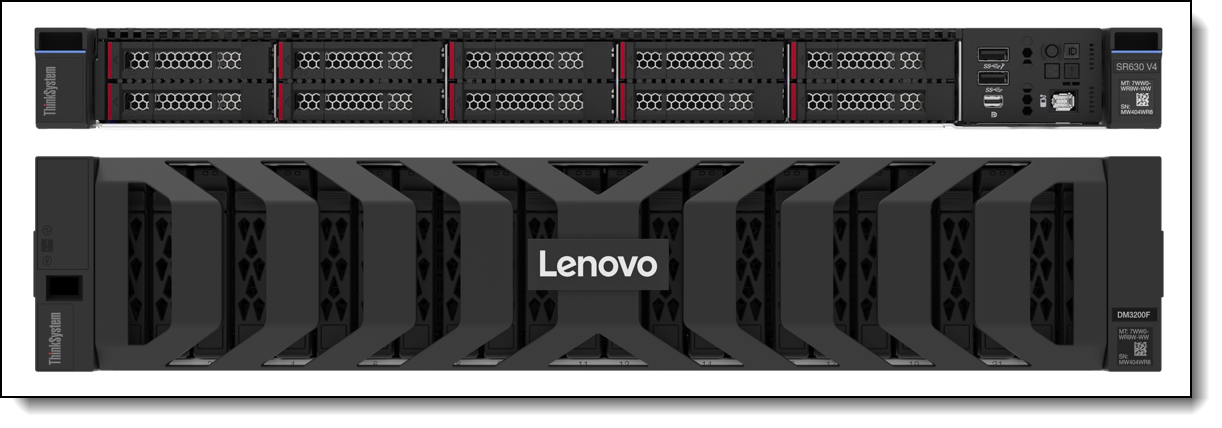
Figure 2. Virtualization Server SR630 V4 and ThinkSystem DM3200F Storage Array
The following table lists the solution specifications for server and storage.
Lenovo solutions for SUSE Virtualization can be configured by using the Lenovo Data Center Solution Configurator (DCSC).
The SUSE SIDs are available in DCSC.
Key Use Cases
This Lenovo + SUSE Virtualization stack applies to a broad range of virtualization and containerization scenarios across industries:
- Enterprise Data Center Modernization: Large organizations looking to refresh or replace legacy virtualization infrastructure can use this solution to consolidate workloads and reduce licensing costs. For example, an enterprise running VMware vSphere can migrate VMs to SUSE Virtualization on Lenovo servers to avoid escalating hypervisor fees. Simultaneously, they can introduce containerized microservices on the same platform. This is ideal for private cloud deployments where both traditional enterprise applications and new cloud-native services run side-by-side, managed uniformly. By bridging VMs and containers, enterprises in finance, healthcare, or government can modernize at their own pace without disrupting operations.
- Edge and Remote Office Deployments: The lightweight, scalable nature of this HCI solution makes it well-suited for edge computing scenarios and remote/branch offices. A minimal two-node SUSE Virtualization cluster with a witness can provide a highly available virtualization platform at an edge site or regional office with limited IT staff. Industries like retail (in-store servers), telecom (network edge), and manufacturing (factory floor IT) can deploy SR630 V4/SR650 V4 servers in compact footprints, running VMs for critical onsite applications and Kubernetes workloads for IoT or analytics at the edge. The integrated management ensures these remote clusters can be centrally monitored and updated, and a storage array like the DM3200F can be used to replicate data back to core data centers for backup or analytics.
- Hybrid Cloud and Multi-Cluster Management: For organizations operating in a hybrid cloud model, this solution provides a consistent experience across on-premises and cloud. SUSE Rancher Prime allows central management of not only the on-prem Lenovo-based SUSE Virtualization clusters but also public cloud Kubernetes services or other Kubernetes distributions. This is valuable for industries like tech and services, where development or data processing might span on-prem and cloud environments. Workloads can be moved or burst into the cloud while on-prem clusters handle steady-state or sensitive data. Unified governance (RBAC, security policies, lifecycle management) across all these clusters greatly simplifies compliance and operations.
- Dev/Test and CI/CD Environments: Development teams and test labs benefit from the flexibility of having VMs and containers in one environment. This solution can serve as an all-in-one DevOps sandbox: teams can quickly provision development VMs or databases as VMs, alongside container-based test environments, using the same infrastructure. The result is faster spin-up and teardown of test environments and streamlined CI/CD pipelines. Universities and research labs, for instance, can use this open-source solution to avoid licensing costs while giving students and researchers the ability to create diverse environments (VMs for legacy apps, containers for modern apps) on demand. The intuitive SUSE Virtualization UI and Rancher’s self-service capabilities make it easier for dev/test teams to manage their workloads without deep virtualization expertise.
Key Benefits
By deploying SUSE Virtualization on Lenovo ThinkSystem V4 servers and DM/DG storage, organizations can realize several key benefits:
- Operational Efficiency: The Lenovo-SUSE solution enables IT teams to do more with less hardware. By consolidating containers and VMs on the same physical servers, you eliminate redundant hypervisor layers and siloed hardware pools. This yields higher resource utilization (CPU, memory, storage) and can improve application performance thanks to direct bare-metal execution for container workloads. Workloads that previously needed separate clusters (for example, a Kubernetes cluster on top of VMs, and a VMware cluster for legacy apps) can now run together, reducing data center sprawl. Furthermore, SUSE Virtualization’s integration of compute and storage means I/O paths are optimized – data is stored locally with replication or on high-speed flash arrays – minimizing latency and boosting overall throughput. The result is an efficient infrastructure where capacity is effectively used and sized to actual workload demand, not to artificial platform silos.
- Simplified Management: Management complexity drops significantly with a unified solution. SUSE Rancher Prime provides a “single pane of glass” to manage VMs and containers across the hybrid infrastructure.
Administrators no longer juggle disparate toolsets for virtualization and for Kubernetes – they can monitor VM health, create or retire VMs, manage container clusters, and handle storage provisioning all through one interface and one set of APIs. This unified platform approach also simplifies training and skill requirements: IT staff can focus on one system, and cross-functional teams can share a common set of processes and dashboards. Automation and lifecycle management are also easier; for instance, updates or patching can be orchestrated across the stack through Rancher and Kubernetes constructs.
Overall, organizations benefit from increased agility – deploying a new application environment or applying a security policy becomes faster and less error-prone with centralized management. Consistent governance and monitoring across all workloads improve compliance and reliability.
This solution adds a Storage Array. Based on the Lenovo ThinkSystem SR630 V4 server and the Lenovo ThinkSystem DM3200F.
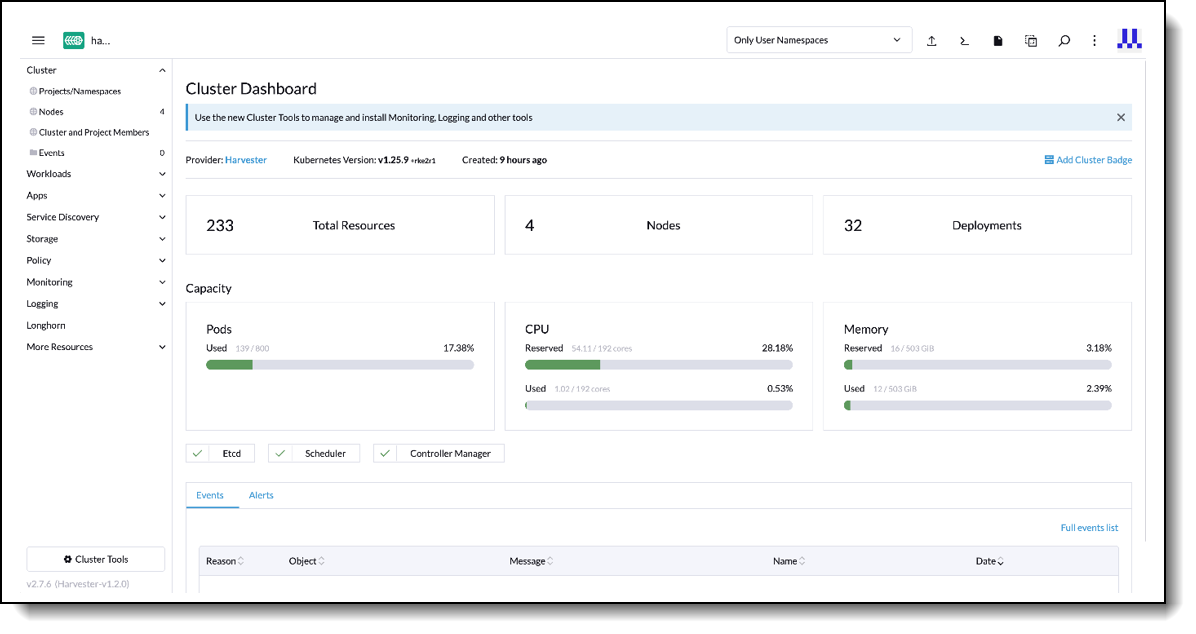
Figure 3. SUSE Virtualization’s full-featured Kubernetes workload user interface
- Scalability and Flexibility: The joint Lenovo and SUSE solution is designed to scale with the business. Scaling compute and storage is as simple as adding more ThinkSystem nodes or expanding the ThinkSystem DM/DG storage pool, with Kubernetes and SUSE Virtualization automatically integrating new resources into the cluster. This linear scale-out ability means the infrastructure can start small (even a single-node test/dev or edge deployment) and grow to dozens of nodes supporting thousands of VMs and containers, without forklift upgrades. The flexibility extends to deployment models – the same technology stack supports core data center deployments, edge clusters, and everything in between. Thanks to SUSE Rancher’s multi-cluster management, organizations can centrally manage multiple HCI clusters across sites or departments, applying uniform security and configuration at scale. Additionally, the solution’s openness gives flexibility in integration: standard APIs and CSI storage interfaces ensure that it can fit into existing ecosystems (e.g., backup tools, cloud services) without proprietary roadblocks. In summary, this solution grows with your needs, whether that means more capacity, more locations, or new use cases, providing headroom for future expansion.
- Cost-Effectiveness: Adopting SUSE Virtualization on Lenovo hardware can significantly lower both capital and operational costs. From a CapEx perspective, using open-source virtualization software eliminates expensive hypervisor licensing fees – organizations are free from the per-socket or per-VM costs that come with proprietary solutions. Support subscriptions for SUSE are available but are typically more predictable and cost-effective than traditional hypervisor licenses. In terms of OpEx, consolidation of workloads leads to a smaller hardware footprint (fewer servers needed) and thus lower power, cooling, and space costs in the data center. The high-density Lenovo SR630 V4/SR650 V4 servers provide a lot of performance per rack unit, and the efficient Lenovo ThinkSystem DM Storage Array (with data reduction features like compression/deduplication) further cuts storage costs by maximizing usable capacity. Moreover, simplified management means IT admins spend less time and effort on maintenance and troubleshooting, which can translate into labor cost savings and more time devoted to innovation. Finally, by avoiding vendor lock-in, organizations protect themselves from the premium pricing of single-vendor ecosystems and can choose competitively priced hardware or cloud integrations over time, ensuring a sustainable, cost-optimized infrastructure strategy.
Measurable Outcomes
Implementing the SUSE Virtualization solution on Lenovo ThinkSystem V4 servers can lead to clear, measurable improvements in IT outcomes:
- Accelerated Deployment Times: Companies can stand up new virtualization environments or roll out updates faster than before. SUSE Virtualization’s appliance-style installation (via ISO or network boot) and Kubernetes-based automation dramatically reduce setup time compared to traditional manual hypervisor installations. Likewise, deploying new workloads (VMs or container applications) is quicker on a unified platform – there’s no need to request separate infrastructure for each type of workload. This can shrink deployment cycles from weeks to hours, enabling faster time-to-value for new services. For example, whereas provisioning a new environment on legacy systems might involve coordinating storage, network, hypervisor licensing, and configuration, with SUSE on Lenovo, much of this is automated or simplified, speeding up delivery of IT resources to the business.
- Higher Resource Utilization & Performance: By co-locating mixed workloads and eliminating unnecessary overhead, the solution helps achieve better utilization of CPU, memory, and storage resources. Organizations can expect to run more applications on the same hardware compared to a siloed approach. In real terms, this might translate to needing fewer physical servers for the same workload, or being able to add new containerized services without purchasing additional hardware, thereby squeezing more value out of each server. Additionally, direct access to hardware (for containers) and high-performance NVMe storage means that applications experience lower latency and higher throughput. A unified cluster can thus deliver improved application performance and responsiveness, which can be measured in faster transaction processing, reduced latency for user-facing services, or the ability to handle higher load with existing resources.
- Improved Manageability and Productivity: With a unified management interface and automation, IT teams can operate with greater productivity. Admins will spend less time on routine tasks like juggling different management consoles, performing duplicate maintenance workflows, or scripting integrations between siloed systems. This consolidation can lead to tangible benefits such as a reduction in administrative overhead (for example, one team can manage what previously took two separate teams) and fewer errors due to consistent processes. In turn, organizations might see improvements in change management metrics and fewer service disruptions. Centralized monitoring and Rancher’s orchestration of updates also contribute to higher uptime and reliability, as clusters can be patched or scaled without significant downtime. Overall, IT departments can quantify these gains in terms of administrator-to-server ratios improving, faster incident resolution times, and the ability to reallocate staff to more strategic projects rather than firefighting complex legacy systems.
- Reduced Total Cost of Ownership: All the above factors contribute to a lower TCO over the solution’s lifecycle. While difficult to measure without specific environment data, companies can track savings from license cost elimination, improved energy efficiency, and streamlined operations. For instance, simply removing proprietary virtualization licensing can save tens of thousands of dollars annually for a moderately sized deployment. Power and cooling savings from running a leaner infrastructure can be observed in facility operating expenses. Over a multi-year period, the open solution’s costs (mostly hardware and support) tend to be far more predictable and potentially lower than a closed, license-intensive alternative. These financial benefits can be measured in budget freed for other initiatives or a lower cost per workload or per user for IT services. Importantly, the investment protection offered by Lenovo’s robust hardware and SUSE’s software support means the infrastructure can serve longer and adapt to new requirements (like supporting new workloads or scaling out) without a rip-and-replace, further extending the value and ROI.
Solution Architecture
The diagram below provides a conceptual view of the solution stack, illustrating how the components fit together to deliver an integrated virtualization and container platform:
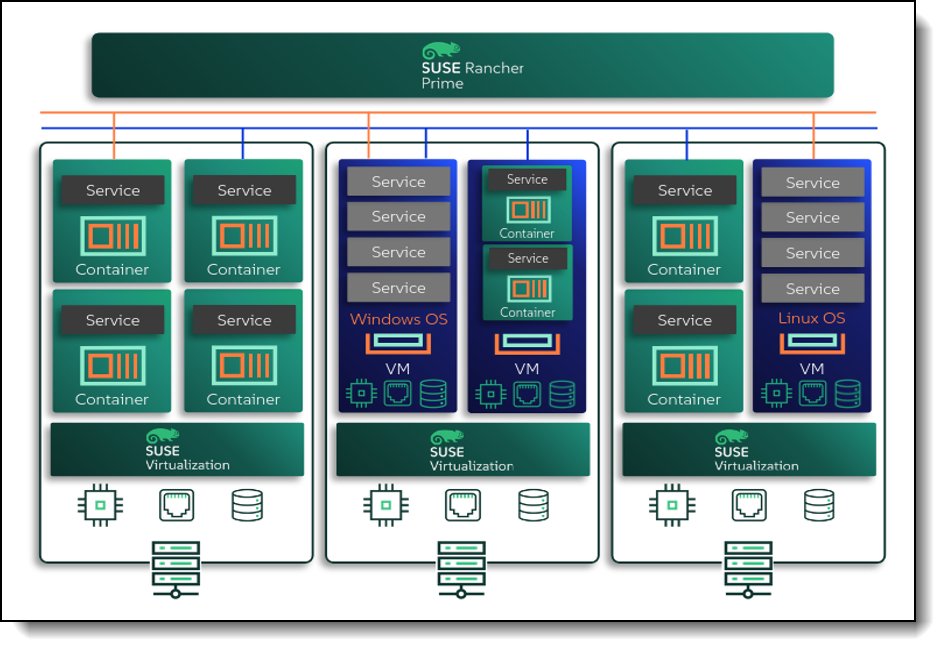
Figure 4. SUSE Virtualization Architecture.
SUSE Virtualization runs on a cluster of Lenovo ThinkSystem SR630 V4 / SR650 V4 servers, providing a unified environment for VMs and Kubernetes-orchestrated container workloads. Each server contributes compute and local storage (NVMe or SSDs) to the SUSE Virtualization cluster (which uses the RKE2 Kubernetes distribution, KVM hypervisor, and SUSE Longhorn for distributed storage). SUSE Rancher Prime operates as the central management plane for one or multiple clusters, delivering a web-based GUI and APIs for lifecycle management, monitoring, and policy enforcement across all Kubernetes and virtualization resources.
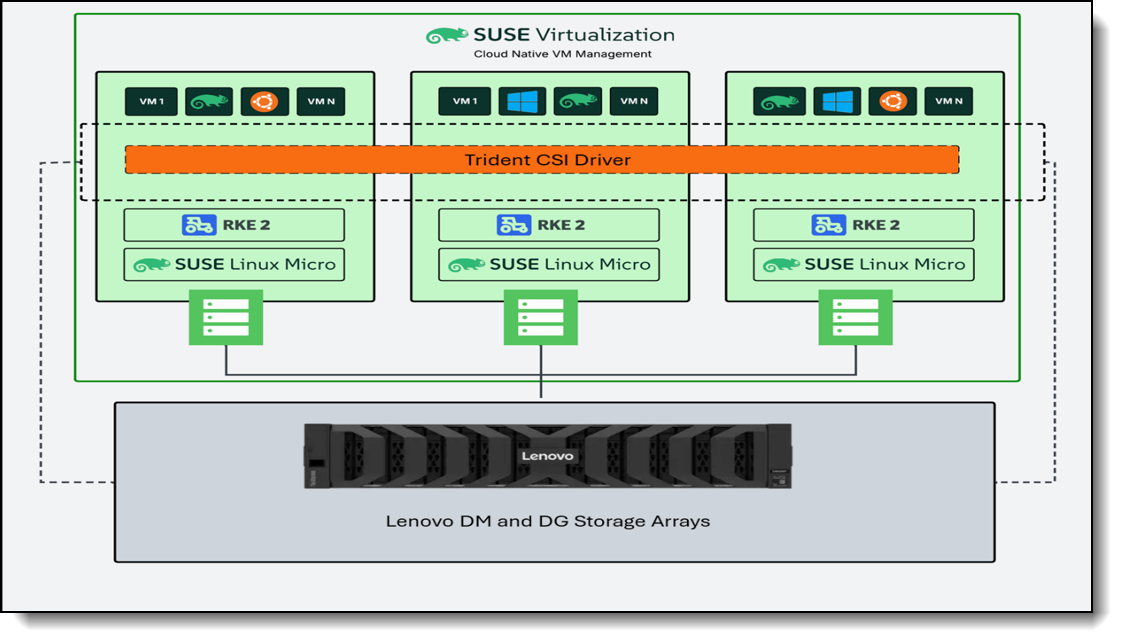
Figure 5. Cloud Native VM Management Architecture.
The Lenovo ThinkSystem DM/DG storage array provides an external, highly available all-flash storage tier that connects via standard protocols (iSCSI, NVMe/FC, NVMe/TCP, etc.) and is integrated through CSI drivers (e.g., NetApp Trident) to dynamically provision persistent volumes for workloads. This allows the solution to combine hyperconverged local storage with enterprise shared storage in one seamless environment, supporting advanced data services such as snapshots, clones, backup, and disaster recovery across the virtualization stack.
With these components working in concert, the solution achieves a balance of powerful hardware and innovative software. Lenovo’s SR630 V4 and SR650 V4 servers supply the raw performance, memory capacity, and reliability for demanding workloads, while the ThinkSystem DM/DG Storage Arrays offer scalable, resilient storage to protect critical data. SUSE’s software ties it all together with an open, cloud-native approach to virtualization. The net result is an architecture that can tackle traditional enterprise virtualization needs and new containerized applications with equal ease, delivering on the promise of a next-generation data center that is efficient, simple to manage, and ready for the demands of hybrid cloud, edge, and beyond.
Trademarks
Lenovo and the Lenovo logo are trademarks or registered trademarks of Lenovo in the United States, other countries, or both. A current list of Lenovo trademarks is available on the Web at https://www.lenovo.com/us/en/legal/copytrade/.
The following terms are trademarks of Lenovo in the United States, other countries, or both:
Lenovo®
ThinkSystem®
XClarity®
The following terms are trademarks of other companies:
Intel®, the Intel logo and Xeon® are trademarks of Intel Corporation or its subsidiaries.
Linux® is the trademark of Linus Torvalds in the U.S. and other countries.
Other company, product, or service names may be trademarks or service marks of others.
Configure and Buy
Please select a locale
Full Change History
Course Detail
Employees Only Content
The content in this document with a is only visible to employees who are logged in. Logon using your Lenovo ITcode and password via Lenovo single-signon (SSO).
The author of the document has determined that this content is classified as Lenovo Internal and should not be normally be made available to people who are not employees or contractors. This includes partners, customers, and competitors. The reasons may vary and you should reach out to the authors of the document for clarification, if needed. Be cautious about sharing this content with others as it may contain sensitive information.
Any visitor to the Lenovo Press web site who is not logged on will not be able to see this employee-only content. This content is excluded from search engine indexes and will not appear in any search results.
For all users, including logged-in employees, this employee-only content does not appear in the PDF version of this document.
This functionality is cookie based. The web site will normally remember your login state between browser sessions, however, if you clear cookies at the end of a session or work in an Incognito/Private browser window, then you will need to log in each time.
If you have any questions about this feature of the Lenovo Press web, please email David Watts at dwatts@lenovo.com.


