

Top
Authors
Published
16 Oct 2026Form Number
LP2558PDF size
7 pages, 371 KBSubscribed to LP2558.
Thank you for your feedback.
Abstract
As AI inference moves into production, enterprises need greater control over proprietary data, model lifecycle, performance, and cost. This is especially the case in regulated, disconnected, or latency-sensitive environments.
The Lenovo Sovereign AI Inference architecture, part of Lenovo Hybrid AI Factory, combines Lenovo, IBM, and NVIDIA technologies to keep data, models, prompts, retrieved context, and KV cache on-premises. Its disaggregated prefill-and-decode design and tiered KV cache enable independent scaling, efficient GPU use, and data sovereignty.
Introduction
Enterprises are moving AI assistants, research, code generation, and multimodal analysis from experimentation into production. Cloud services can suit proofs of concept and variable demand, but sustained use can increase requirements for data sovereignty, predictable latency, model control, capacity, and cost visibility.
The Lenovo Sovereign AI Inference architecture addresses these requirements by keeping inference within the enterprise boundary, controlling model and data placement, and scaling owned infrastructure as demand grows. This Solution Brief describes the use cases, components, benefits, and deployment options.
The Sovereign AI Inference Use Case
AI sovereignty has four dimensions:
- Data sovereignty — Prompts, context, embeddings, and outputs remain within the organization’s boundary and jurisdiction, including deployments without external inference endpoints.
- Model sovereignty — Enterprises select, fine-tune, version-pin, and update open-weight models on their own schedule.
- Operational sovereignty — The enterprise manages availability, performance, capacity, and workload priority.
- Economic sovereignty — Owned infrastructure provides greater cost visibility and control as token volumes grow.
The table below summarizes common sovereign AI inference use cases by industry, workload, and primary sovereignty driver.
Lenovo Sovereign AI Inference Architecture
The architecture keeps prompts, retrieved context, KV cache, and outputs on enterprise-managed infrastructure, with no required external endpoint in the inference data path. Enterprises can deploy, fine-tune, and version-pin open-weight models; independently scale Kubernetes-based prefill and decode resources; and tier KV cache to IBM shared storage to reduce memory pressure and improve GPU utilization.
Deployment runbooks for IBM and NVIDIA RAG and agentic blueprints, together with the LangFlow visual application builder, help keep retrieval pipelines, embeddings, and agent workflows on premises while accelerating the first production workload.
The following table outlines the software components that support workloads, orchestration, inference serving, models, data services, operations, and observability.
The following table summarizes the compute, storage, and networking components that form the hardware foundation of the architecture.
Inside the Architecture
The architecture, shown in the figure below, ranges from a single-node proof of concept to a Kubernetes-orchestrated, multi-node cluster. Specialized compute, workload, storage, and network resources can scale independently with token volume and user demand.
IBM Storage Scale provides a unified namespace for inference data, model weights, KV cache, and outputs such as transcripts, agent memory, logs, traces, and telemetry. Common encryption, access, retention, and audit policies simplify governance across the pipeline. The architecture uses scale units rather than a fixed configuration, enabling enterprises to expand compute, workload, storage, and network capacity independently as requirements evolve.
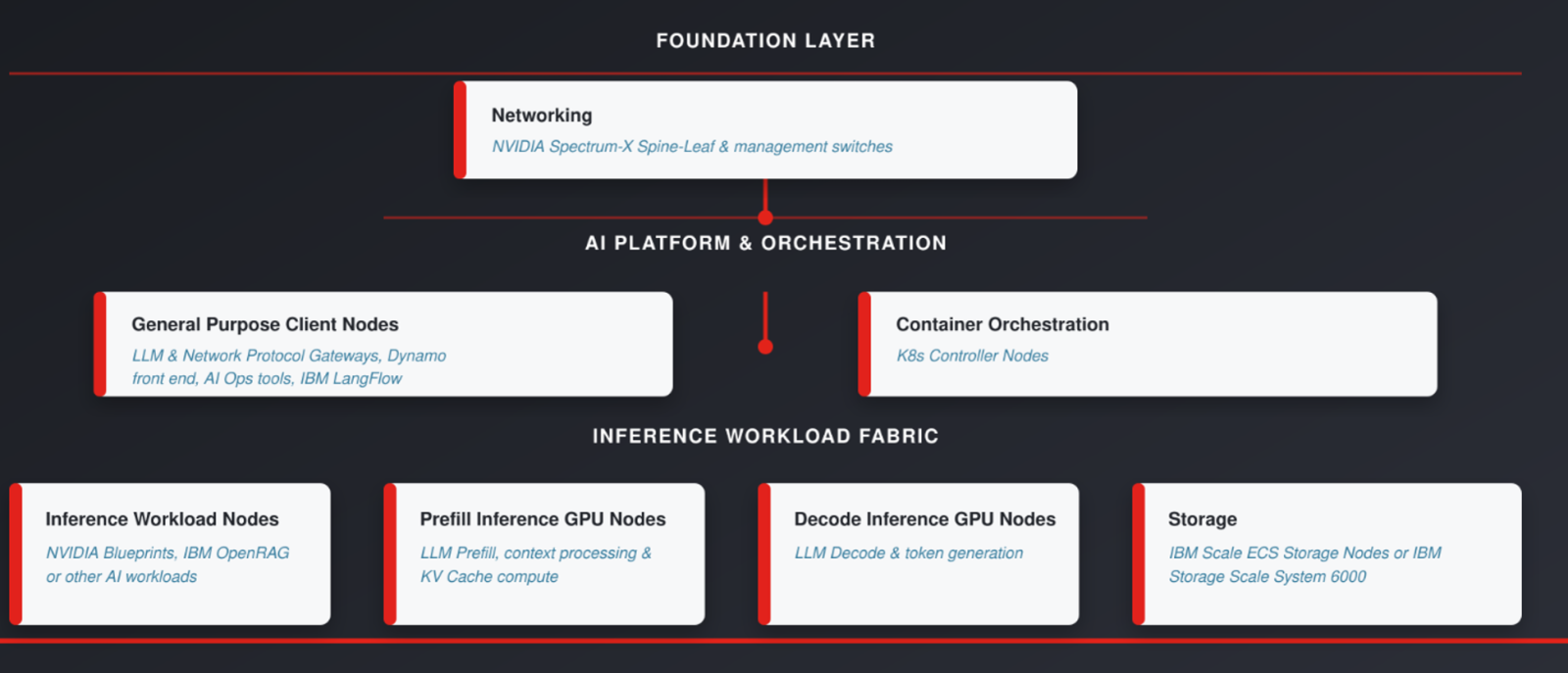
Figure 1. Lenovo Sovereign AI Inference Architecture on a Multi-Node Cluster
The architecture’s key platform capabilities mapped to their practical customer outcomes, including stronger sovereignty, flexible scaling, improved GPU utilization, deployment choice, and faster time to production are shown in the following table.
Single Node POC and Demo System
The following table presents a compact single-node starting point for proofs of concept and demonstrations using the included AI workloads and orchestration tools.
| Node Role | Starting Point | Content |
|---|---|---|
| POC/Demo | 1 | NVIDIA AI-Q Blueprint, IBM OpenRAG, LangFlow |
For reference and details, view the document Lenovo Validated Design Hybrid AI 281 with IBM.
Multi-Node Cluster
The following table provides recommended starting points and primary scaling factors for each role in a production multi-node cluster.
Services and Support
Lenovo AI Services can support workload and data assessment, cluster sizing, model and blueprint selection, system integration, on-site deployment, validation, and performance tuning. After go-live, Lenovo can assist with operations, re-tuning, and expansion as token volume and workload mix evolve, including connected, disconnected, and air-gapped environments.
Conclusion
The Lenovo Sovereign AI Inference architecture gives enterprises greater control over production of AI data, models, infrastructure, and costs. Independent scaling of compute, storage, and inference resources aligns capacity with demand, while support for connected, disconnected, and air-gapped environments provides a practical foundation for owning and operating enterprise intelligence.
Explore the Hybrid AI Advantage with NVIDIA
Discover how Lenovo and NVIDIA are helping enterprises build secure, scalable, and cost-efficient AI factories - bringing generative AI, RAG, and real-time inferencing into production with confidence.
Learn more about the Lenovo Hybrid AI Advantage, the Lenovo Validated Design Hybrid AI 281 with IBM and explore the full portfolio of NVIDIA-accelerated solutions and services by visiting the Lenovo Hybrid AI Solutions page.
Authors
Pierce Beary is the AI Solutions Product Manager focused on datacenter solutions, he previously worked on the WW HPC team as a product manager for Lenovo EveryScale (LeSI). Prior to joining Lenovo in 2021, Pierce held positions at Exxon Mobil, where he worked as a Mechanical Engineer and Engineering Project Manager. Pierce has a Bachelor’s degree in Mechanical Engineering from North Carolina State University.
Traci Parker is the Worldwide Solutions Marketing Manager for Enterprise IT and AI at Lenovo. She specializes in hybrid cloud, infrastructure modernization and AI solutions. She has more than 15 years of experience as a Marketing Manager and Product Marketing Manager across high-tech, fin-tech and healthcare industries.
Trademarks
Lenovo and the Lenovo logo are trademarks or registered trademarks of Lenovo in the United States, other countries, or both. A current list of Lenovo trademarks is available on the Web at https://www.lenovo.com/us/en/legal/copytrade/.
The following terms are trademarks of Lenovo in the United States, other countries, or both:
Lenovo®
Lenovo Hybrid AI Advantage™
The following terms are trademarks of other companies:
IBM® is a trademark of IBM in the United States, other countries, or both.
NVIDIA®, NVIDIA Spectrum®, and NVIDIA Spectrum-X are trademarks of NVIDIA Corporation.
Other company, product, or service names may be trademarks or service marks of others.
Configure and Buy
Please select a locale
Full Change History
Course Detail
Employees Only Content
The content in this document with a is only visible to employees who are logged in. Logon using your Lenovo ITcode and password via Lenovo single-signon (SSO).
The author of the document has determined that this content is classified as Lenovo Internal and should not be normally be made available to people who are not employees or contractors. This includes partners, customers, and competitors. The reasons may vary and you should reach out to the authors of the document for clarification, if needed. Be cautious about sharing this content with others as it may contain sensitive information.
Any visitor to the Lenovo Press web site who is not logged on will not be able to see this employee-only content. This content is excluded from search engine indexes and will not appear in any search results.
For all users, including logged-in employees, this employee-only content does not appear in the PDF version of this document.
This functionality is cookie based. The web site will normally remember your login state between browser sessions, however, if you clear cookies at the end of a session or work in an Incognito/Private browser window, then you will need to log in each time.
If you have any questions about this feature of the Lenovo Press web, please email David Watts at dwatts@lenovo.com.


